
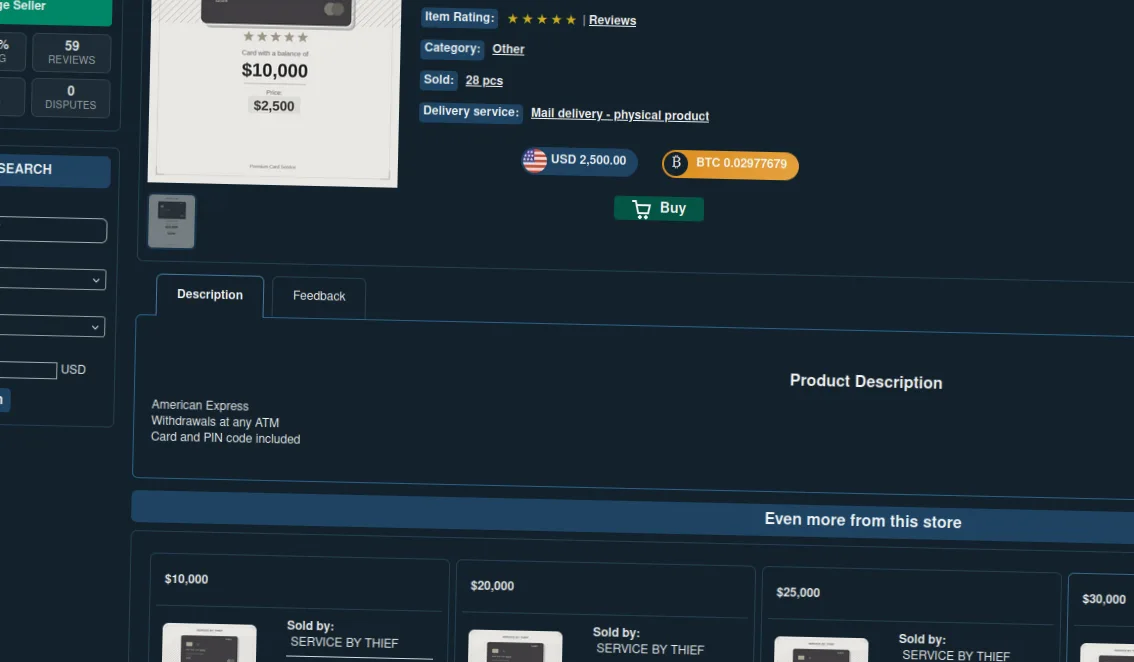
In November 2024, a man aged 34, Mark T. from Tampa Bay, made a bold decision. He purchased six fake debit cards for $480 using cryptocurrency on a covert marketplace. These cards were tied to stolen banking information.
Mark took out $4,200 from four ATMs without any problems initially. However, his fortune shifted dramatically at the fourth machine, resulting in dire repercussions. Within 72 hours, he transitioned from an anonymous buyer to a federal inmate. The surveillance footage was instrumental in capturing his activities, which played a significant role in his apprehension.
Ultimately, he was sentenced to 60 months in prison. We analyzed the choices that resulted in this verdict.
The Carding Chain Mark Used
Carding continues to be a significant issue in cybercrime. Mark’s approach showcases a classic technique:
Criminals gather magnetic card data through methods like ATM skimmers, phishing scams, or purchasing it from the dark web.
With the compromised information, including names, expiration dates, and card numbers, blank plastic cards that resemble authentic ones are then imprinted.
If a PIN is captured by hidden cameras or overlay devices, cash can be withdrawn by the criminal.
The fraudster quickly withdraws cash, often acting before the victim can cancel their card.
Laundering Money: The cash is transformed into cryptocurrency, frequently through Bitcoin ATMs or peer-to-peer platforms, effectively hiding its source.
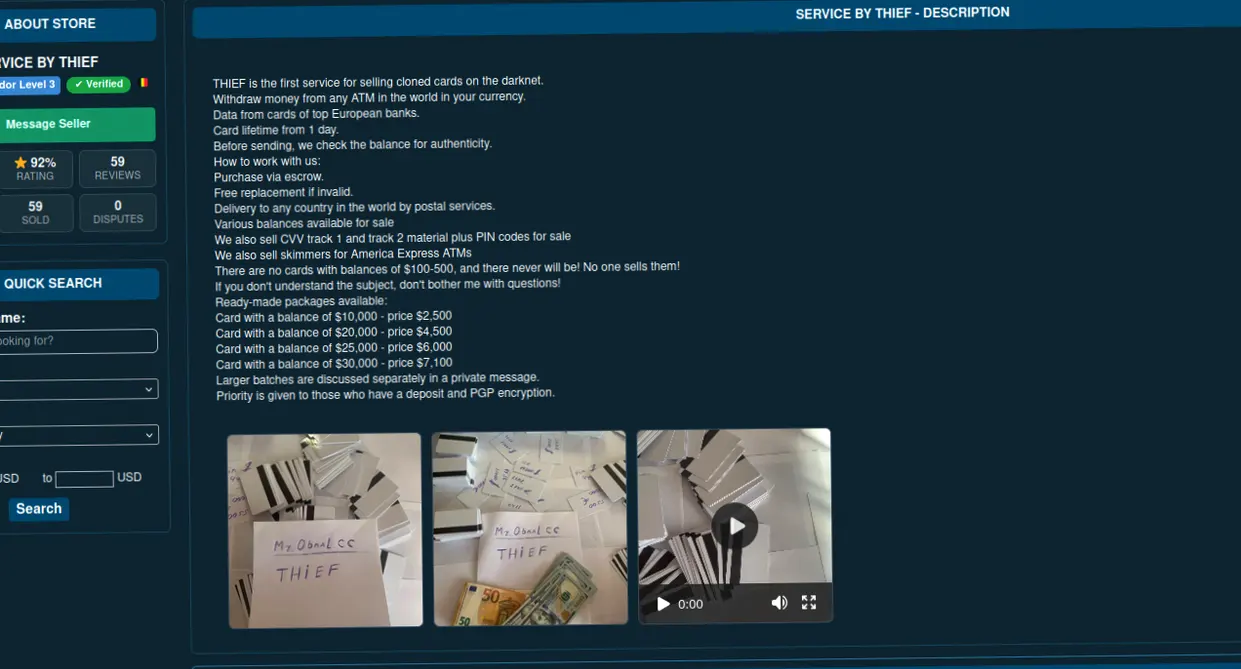
Mark sourced his cards from a marketplace we won’t name. He opted for Monero as payment due to its difficulty to trace. The cards arrived discreetly packaged, simulating a successful transaction. Yet, many buyers overlook a crucial fact: ATMs serve as more than cash dispensers; they function as surveillance systems.
Today's ATMs function as sophisticated monitoring devices. Nearly every machine is equipped with cameras focused on users, capturing footage in 1080p resolution, frequently with night vision capabilities. Many ATMs have extra cameras for wider coverage. We meticulously document every transaction, noting details like the time, amount, card number, ATM ID, and transaction status. These systems also track geographical locations, relaying this data to banking records.
During Mark’s ATM visit in a suburb of Tampa Bay, the camera clearly captured his image. He was identified while withdrawing $700 in just twenty-three seconds. This footage served as substantial evidence for law enforcement. Anyone attempting to detect skimming devices at ATMs should keep in mind that the same cameras monitoring for skimmers also observe user behavior.
The Investigation Timeline
Reports of unusual withdrawals surfaced on November 1, 2024, from residents of Florida, Georgia, and North Carolina, sparking complaints. The banks blocked their cards and forwarded the information to the early fraud detection system.
On Day 3, a pattern was identified by anti-fraud algorithms. An automatic alert was triggered by withdrawals from a set of cloned cards across various states in a short timeframe. After being escalated, the case was received by the bank's investigation unit.
On Day 5, everything is passed by the bank to the U.S. Secret Service. A USSS analyst requests the logs and video recordings from all ATMs involved.
A clear image of a face emerged in the video from the fourth ATM on Day 8. When we cross-referenced the video with the driver's license records, we identified Mark T. as having no previous convictions. All withdrawals occurred in a 40-mile radius surrounding his home address, as revealed by transaction analysis. Those familiar with carding forums dark web know that physical proximity is a fatal mistake.
A warrant for electronic traces was obtained by the investigator on Day 12. Visits to Tor exit nodes were identified by the ISP analysis during the times of purchase. Investigators linked Mark's wallet to his darknet marketplace account through a court order related to the exchange where he acquired Monero.
On Day 14, a search warrant is issued by the court. During the search, authorities seized a laptop showing visits to darknet marketplaces, $3,200 in cash, packaging from the shipment, a magnetic stripe read/write device (MSR), and six blank plastic cards.
On Day 15, we see Mark getting arrested. During the interrogation, the cards were purchased by him, and four out of six were cashed out. By the time he tried to use them, the bank had already blocked the remaining two.
| Metric | Number |
|---|---|
| Withdrawals | 4 |
| A total of $4,900 was taken out. | |
| The amount of $480 was spent on cards. | |
| Days from withdrawal to arrest | 15 |
| A sentence of 5 years (60 months) in federal prison was imposed. | |
| We were imposed a total of $22,000 in restitution and fines. | |
| We received a 3-year supervised release period. |
Discussions on cloned cards reddit often miss this point: the investigation moved faster than the cash-out window.
Why Crypto Failed to Protect Him
Choosing Monero, Mark made a decision to buy a cryptocurrency known for its privacy features. He encountered several challenges during the buying process.
A centralized exchange requiring KYC verification was chosen by him to acquire Monero. His ID and a selfie were submitted by him. As required by a court order, his identity and transaction details were revealed by the exchange. Although tracking Monero can be complex, the date and amount of his purchase were vital pieces of evidence.
The sequence of events was crucial. His actions—buying Monero, purchasing on a marketplace, receiving the card, and withdrawing cash—took place over two weeks. This narrow timeframe created strong circumstantial evidence. The investigation was bolstered by additional tangible proof. Cards found during the inquiry had magnetic strips corresponding to information from real victims. No cryptocurrency can erase such clear evidence.
Video recordings offered undeniable proof. This footage, regardless of other factors, directly tied Mark to the crime scene. Many offenders mistakenly think they are shielded by the anonymity of the darknet. However, ATMs operate outside that space. They turn digital crimes into real-world actions, eliminating any chance of remaining anonymous.
The Monero wallet links to an account on the website where the purchase was made through a court order to the exchange where Mark bought Monero.
Six Fatal Mistakes
Mark committed six critical blunders. First, he made cash withdrawals from ATMs located less than 40 miles from where he lived. This behavior immediately raises flags in fraud detection systems. Anyone engaging in illicit card activity should know that such proximity can draw unwanted attention.
Secondly, he did not hide his identity during these transactions. Lacking a disguise, he was easily recognizable on surveillance footage. This lack of caution allowed law enforcement to link him to the withdrawals using public records.
Third, he opted to buy Monero via a centralized exchange. This choice connected his real identity to future cryptocurrency dealings, thereby jeopardizing his anonymity.
Fourth, he kept incriminating materials at his residence. When authorities executed a search warrant, they discovered a laptop, blank cards, and an MSR device. Digital footprints can linger, especially when utilizing software like Tor.
Fifth, he had $3,200 in cash at his place. The denominations found matched those withdrawn at the ATMs, which reinforced the evidence against him.
Finally, he acted with undue haste. His withdrawals occurred within a narrow time frame. Had he spread them out more, it could have lessened immediate detection. Regardless, the surveillance cameras would have still picked him up.
Imagine trying to sneak through mud. The faster he moved, the clearer his path became. Mark's errors illustrate just how quickly fraudulent activities can be exposed.
Lessons for Security Professionals
Mark's experience underscores how effective security systems can be, a fact often overlooked by card fraud perpetrators. From his situation, we can extract valuable lessons for cybersecurity professionals.
Anti-fraud strategies serve as a primary yet frequently ignored line of defense. Automated systems that evaluate behaviors, location data, and scoring models function without human input. Banks must consistently invest in machine learning to spot irregularities. Those developing defenses against card skimming recognize that automated tools can detect patterns that might elude human observers.
It is crucial to merge physical evidence with digital analysis. ATM video footage is a significant type of evidence, but without digital transaction logs, it lacks effectiveness. Identifying the right moment to capture a frame is key. Combining these elements is vital for thorough investigations. To effectively guard against credit card skimming, we need both surveillance and transaction oversight.
The assumption that cryptocurrencies ensure anonymity is deceptive. Entering the crypto space through KYC-compliant exchanges and exiting via cash transactions creates connections between the digital and physical realms. Complete anonymity is unattainable as long as KYC regulations exist. For those looking to identify card skimmers, it is important to recognize that similar systems can uncover fraudulent activities.
Customer vigilance often represents the largest weakness. Prompt reporting by victims leads to faster card deactivation, which reduces potential losses for banks. When banks prioritize educational efforts with their clients, they effectively lower fraud risks. While resources on skimming protection technology are beneficial, enhancing customer awareness is even more vital.
To detect the presence of a skimmer, the same caution applies to identifying unauthorized transactions. Regularly checking ATM footage can show signs of tampering, but diligent account monitoring is essential for early detection. While skimming protection devices exist, being informed offers the best defense.
The Verdict and the Real Cost
Mark T. admitted to committing fraud and money laundering in March 2025, as defined by 18 U.S.C. § 1029 and 18 U.S.C. § 1957. The U.S. District Court for the Middle District of Florida sentenced him to 60 months in prison. Following his prison sentence, Mark will spend three years under supervision. Additionally, he must pay a total of $22,000, which includes restitution for three individuals impacted by his actions.
The judge highlighted that Mark was not the mastermind behind the scheme. Rather, he played the role of a buyer, the final link in a series of transactions. This position can lead to serious repercussions. Those who create these fraudulent networks often evade detection, making it challenging for authorities to find the real instigators.
Mark turned $480 into a significant prison sentence. Each decision he made, thinking it was safe, left a trace. Every single transaction had a record. Although the darknet offered a degree of anonymity, it couldn't protect him from the watchful eyes of law enforcement.
 Exploring Dark Web Onion Sites: What to ExpectDiscover dark web onion sites and learn how to navigate them safely while accessing unique content and hidden services.
 Accessing Grams Onion Links: A User's GuideDiscover how to access Grams onion links safely and effectively. Get step-by-step instructions for navigating the dark web with ease.
 Dark web sites iphoneExplore dark web sites on your iPhone safely with our practical setup instructions and site recommendations.